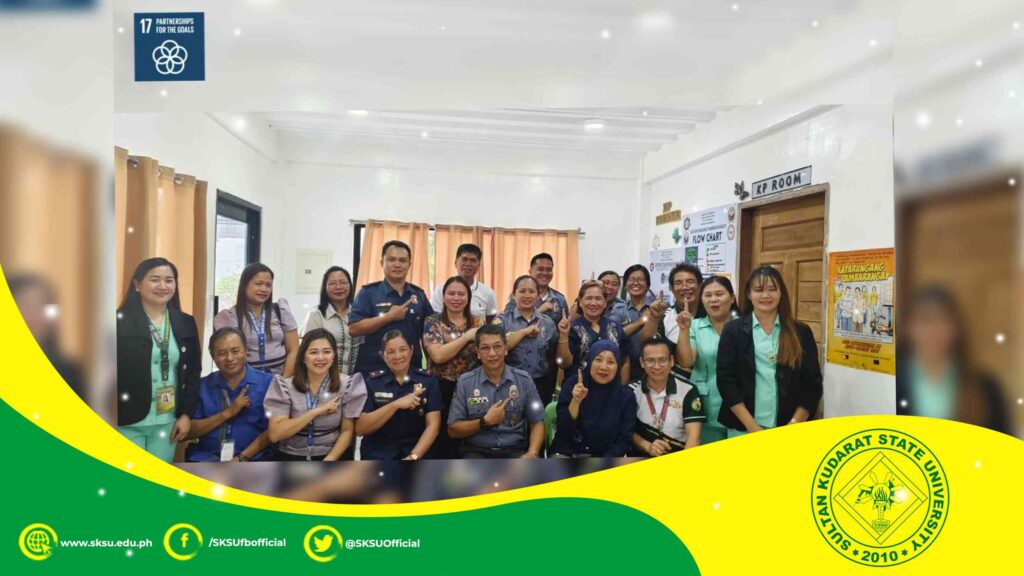

Tacurong City – Sultan Kudarat State University (SKSU), through the College of Teacher Education (CTE), strengthened its collaborative network for community extension as government agencies, education stakeholders, and community partners convened for the Project REACH Stakeholders’ Meeting and Partnership Consultation on September 28, 2026, at the San Emmanuel Barangay Hall, Tacurong City.
The consultation brought together the SKSU Extension Team and representatives from the Department of Labor and Employment (DOLE), Department of Education–Alternative Learning System (DepEd-ALS), Technical Education and Skills Development Authority (TESDA), Bureau of Jail Management and Penology (BJMP), Philippine National Police (PNP), San Emmanuel National High School (SENHS), and Barangay San Emmanuel.
At the heart of the meeting was Project REACH: Reconnecting Education and Aspirations of the Community’s Hope in San Emmanuel National High School, an extension initiative that seeks to expand educational and developmental opportunities through academic interventions, skills development, livelihood opportunities, career preparation, values formation, and coordinated institutional support.
Dr. Anamarie G. Valdez, Project Leader, presented the rationale of Project REACH and discussed its target beneficiaries, proposed educational interventions, resource requirements, livelihood opportunities, and possible areas of partnership. The presentation provided the framework for an open consultation in which participating agencies identified how their respective mandates and programs could complement the initiative.
DOLE discussed possible livelihood assistance and skills-based opportunities for qualified beneficiaries, including livelihood resources and activities that may be accessed through existing programs, subject to appropriate coordination and program requirements.
DepEd-ALS emphasized the importance of sustained support for learners who were unable to continue through the formal education system. The discussion highlighted learner monitoring, teacher training and seminars, and the need to strengthen support mechanisms that will help ALS learners continue their education. Its representatives likewise expressed appreciation for partnerships that broaden the opportunities available to their learners.
TESDA, meanwhile, expressed openness to available scholarship and training opportunities for qualified beneficiaries. Institution-based and community-based training modalities were discussed as possible pathways for providing beneficiaries with relevant technical and vocational competencies.
For interventions involving Persons Deprived of Liberty (PDLs), BJMP highlighted the challenge of ensuring continuity and monitoring, particularly when learners are released from custody. The discussion also raised possibilities for prevention, counseling, and additional skills-development activities. BJMP representatives noted that proposed partnership arrangements would be forwarded through the appropriate channels for review.
The PNP brought another dimension to the partnership by emphasizing safety, security, prevention, and community awareness. Its representatives indicated their availability to provide subject-matter expertise and lectures and recommended that relevant awareness activities include teachers alongside learners to strengthen school and community preparedness.
San Emmanuel National High School welcomed Project REACH as an opportunity to support the long-term development of its learners. The school emphasized the importance of addressing not only academic needs but also learner mindset, discipline, and holistic development and expressed support for appropriate educational, training, and livelihood interventions.
More than a meeting of institutions, the consultation established a common direction for Project REACH: connecting education with broader pathways for personal development, skills acquisition, livelihood, employment preparation, responsible citizenship, and community participation.
Rather than working through isolated interventions, the discussions demonstrated how the participating institutions could contribute according to their respective mandates and expertise—SKSU through education and extension; DepEd-ALS through learning continuity and learner support; TESDA through technical-vocational pathways; DOLE through livelihood and employment-related opportunities; BJMP through PDL education and rehabilitation support; PNP through safety, prevention, and responsible-citizenship initiatives; and the school and community through sustained local support.
The meeting opened with a prayer led by Dr. Joselyn C. Estrellan, followed by welcome remarks from Hon. Roland T. Catbagan, Barangay Captain of San Emmanuel. Dr. Lovelyn C. Llanillo served as program host, while Dr. Maricel L. Amit, SKSU Co-Project Leader, delivered the closing remarks.
The Project REACH Extension Team is composed of Dr. Anamarie G. Valdez, Project Leader, and Dr. Joselyn C. Estrellan, Dr. Lovelyn C. Llanillo, and Dr. Maricel L. Amit, Co-Project Leaders.
The consultation concluded with a shared direction toward translating the identified areas of collaboration into appropriate institutional arrangements and responsive interventions for the project’s beneficiaries.
Through Project REACH, SKSU continues to extend education beyond the walls of the University—bringing institutions, expertise, and opportunities together to help learners and communities build meaningful pathways toward a more hopeful and productive future.