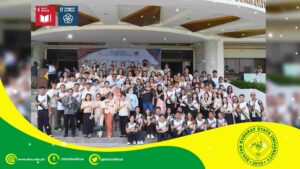
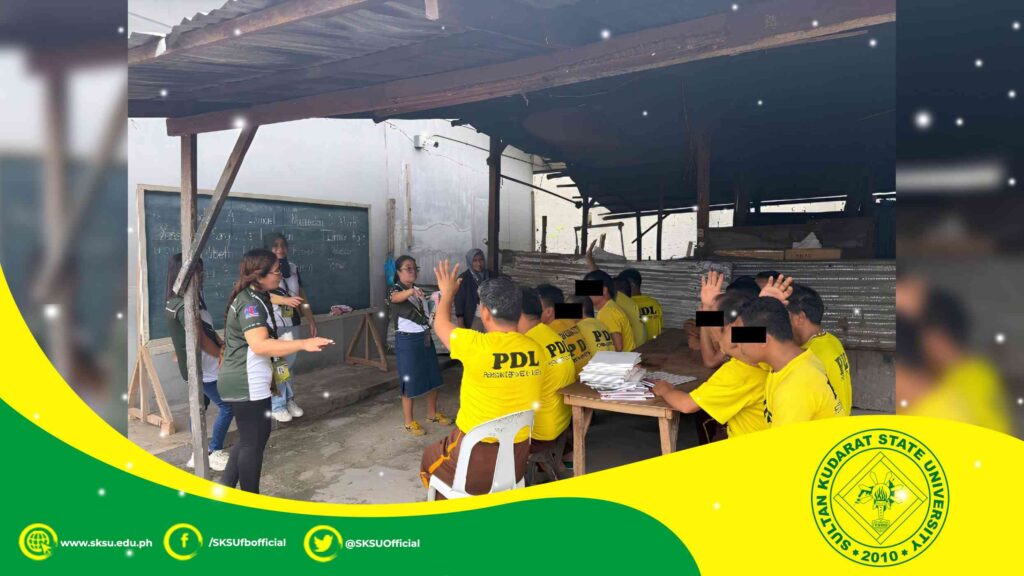

In a bold belief that persons deprived of liberty (PDLs) deserve access to education and dignity, Sultan Kudarat State University’s College of Teacher Education of ACCESS Campus and College of Industrial Technology of Isulan Campus continued their extension initiative on September 17, 2026, at Isulan District Jail, Kenram, Isulan, Sultan Kudarat—challenging the stigma that often renders Filipino inmates invisible to institutional support.
The program, titled “Empowering Lives and Education of Inmates at Isulan District Jail: Expanding Horizons for Persons Deprived of Liberty,” represents SKSU-CTE’s strong institutional commitment to recognizing the humanity and potential of PDLs. The initiative brought together faculty and staff from the College to deliver integrated sessions on wellness, counseling, and educational development—treating rehabilitation not as charity, but as a matter of human rights.
Morning activities centered on wellness, community-building, and reflection, while afternoon sessions prioritized psychosocial support and collaborative planning with university lecturers and project leads. Dr. Maricel L. Amit, Project Leader, anchored the day’s message, while interactive group activities created space for inmates to reclaim dignity, voice, and connection—elements often stripped away within carceral systems.
“We are thankful for the continuous and positive support of Isulan District Jail toward the activities of this project and look forward to more activities in the future,” Dr. Amit said.
One PDL, Roy remarked that the Zumba and wellness dance represented the most exciting part of the activity. “Salamat dahil nandito kayo, may matutuhan na naman kami,” Dandy, another inmate, said—words that translate to gratitude for the university’s presence and the promise of continued learning.
JO1 Alves Kim Cabangisan of the Isulan District Jail expressed the management’s gratitude for the program’s transformative reach. “This extension activity allows our PDLs to reflect deeply on their lives and eventually reintegrate into society with renewed purpose,” Cabangisan stated. “The impact of programs like this is immeasurable—it gives our inmates the tools and hope they need to rebuild their lives and become productive members of the community.”
What distinguishes SKSU-CTE’s approach is its refusal to treat this as a one-time outreach. The deliberate focus on continuation signals a college willing to sustain its presence and resources in spaces typically abandoned by institutions—spaces where poor Filipinos are disproportionately confined.
With continuation already in motion, SKSU-CTE edges closer to answering a question the Philippine justice system has long avoided: Can rehabilitation be real? Can dignity be restored? This extension program suggests yes—if institutions have the courage to show up, consistently and intentionally.