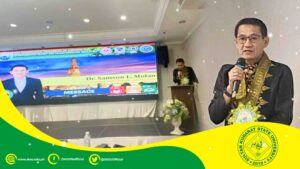
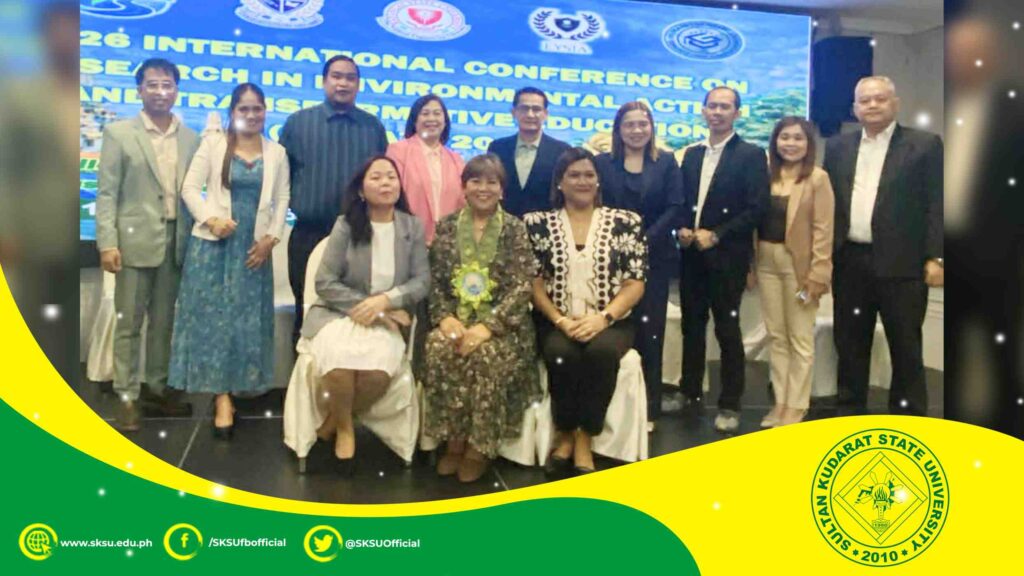

Sultan Kudarat State University (SKSU) President, Samson L. Molao, presented a groundbreaking research study during ICREATE 2026 held in Bangkok, Thailand on April 16-18, reinforcing the university’s commitment to science-driven environmental governance and sustainable development.
In his presentation, President Molao highlighted the ecological and socio-political significance of the Ligawasan Marsh—one of the largest inland wetlands in the Philippines, covering approximately 220,000 hectares across Maguindanao del Sur, Cotabato, and Sultan Kudarat. The marsh is vital for biodiversity conservation, flood mitigation, and local livelihoods, while also bearing historical importance due to events such as the Mamasapano Clash in its surrounding areas.
The study, entitled “Digital Stewardship and Environmental Governance: An IT-Enabled Policy Framework for Wildlife and Indigenous Fish Conservation in Ligawasan Marsh,” was conducted in response to the request of local government units (LGUs) seeking SKSU’s expertise in crafting a Ligawasan Marsh Development Plan (LMDPlan). The research was funded by Former DBM Secretary Amenah F. Pangandamen through the MinSuPala – Innovation and Research Development Consortium.
Fieldwork was carried out in selected municipalities in Maguindanao del Sur, including Paglat, Datu Salibo (SK Pendatun), and Sultan sa Barongis. The study utilized indigenous fishing techniques, vegetation assessments, and wildlife monitoring to document fish species, plant diversity, and avian and bat populations within the marsh ecosystem.
President Molao emphasized key policy and program recommendations, including the enactment of a Local Biosecurity Ordinance, implementation of IT-enabled environmental monitoring systems, strengthening of community-based conservation, habitat restoration for indigenous species, and enhanced inter-agency collaboration.
The research ultimately aims to establish a comprehensive Ligawasan Marsh Development Plan (LMDPlan)—anchored on the integration of science, technology, and community stewardship.
In closing, President Molao underscored:
“When science, technology, and community stewardship converge, environmental governance becomes not only possible—but sustainable.”